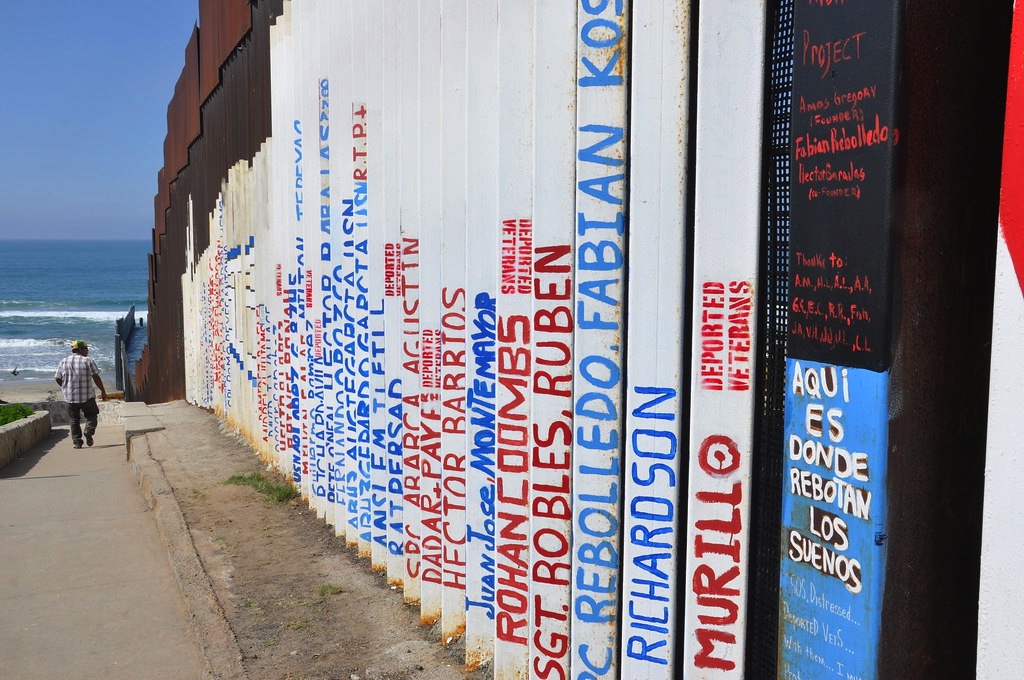
Rocks. Tear gas. Police in riot formation. In November 2018, chaos erupted at the El Chaparral plaza in the Mexican city of Tijuana. Individuals seeking protection from harm in their home countries were turned back from this port of entry south of San Diego (Lind 2018). As part of a Trump administration policy called “metering,” asylum seekers in Tijuana and other border cities were forced to wait months to apply for refuge in the United States. Metering and other recent guidelines are not historical outliers. For decades, the U.S. federal government has made the legal process of seeking protection and permanent residence lengthy and difficult. Both Republican and Democratic administrations have detained asylum seekers for long periods of time, often separating parents and children in the process (Briggs 2020). Detention, family separation, and the “criminal prosecution of migrants for ‘improper entry’” are clear examples of how U.S. immigration policies treat asylum seekers as criminals (McDonnell and Merton 2019:97). Inspiration for reform, then, is not likely to come from within U.S. borders; imagining an alternative requires crossing the Atlantic.
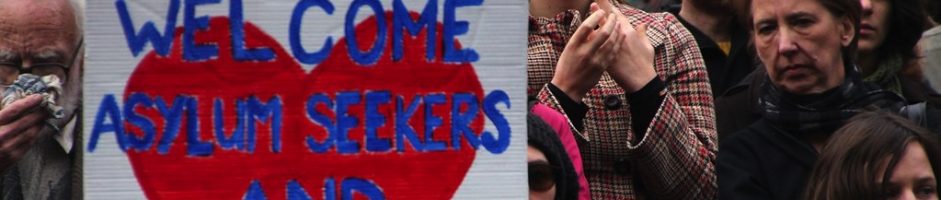
In the Republic of Ireland, individuals seeking international protection encounter a more welcoming political and legal environment. Rather than huddle with one another on bridges awaiting entry (Lind 2018), asylum seekers in Ireland travel to a centralized accommodation center to file an application for sanctuary. From there, they are relocated to one of seventy-five open accommodation centers where they await a ruling on their refugee status (White 2012). During this period, the Irish government provides free meals, education, health screening, welfare payments, and more (IDC 2015). This system is known as Direct Provision and Dispersal (DPD). As of April 2020, there were approximately 7,400 people living in DPD accommodations (Irish Refugee Council 2020).
Experiencing Home and Hope
Sociological research provides a glimpse into the lives of the nearly 50,000 asylum seekers who have passed through the system since 2000 (Loyal and Quilley 2018). Regardless of their gender, race, and nationality, asylum seekers commonly experience security and a sense of belonging in open reception centers (O’Reilly 2018). For many individuals, their residence and the broader community represent home. Mary, an asylum seeker living in a DPD center near Dublin, reported that “now we have got a shelter, we are protected, we are provided, this is our home!” (O’Reilly 2018:828). In contrast, for the estimated 21,000 individuals waiting in Mexican border cities in November 2019, home was uncertain (AIC 2020).
“now we have got a shelter, we are protected, we are provided, this is our home!”
Outside of the hotel or apartment in which they live, asylum seekers form lasting connections with the wider suburban or rural community. Volunteer opportunities, religious activities, and educational training programs link asylum seekers with both one another and Irish citizens. Such sustained civic engagement in a community promotes ‘informal citizenship’ (Sassen 2003:50). For asylum seekers, belonging is an emotional status, rather than solely a legal one. Even as they await a decision on formal citizenship, asylum seekers lead lives filled with hope, inclusion, and community involvement. Highlighting these positive experiences counters common perceptions of asylum seekers, in the U.S. and elsewhere, as dependent and vulnerable (White 2012).
Like their adult parents and neighbors, children also develop meaningful, place-based attachments. For instance, in the suburban open accommodation center of Glengarry, the Sunshine after-school club brings together groups of ‘playmates’ every week (White 2012). These relationships between non-Irish and Irish children often transcend ethnic, linguistic, and religious differences. And, unlike in many American immigration detention facilities, asylum-seeking children still go home to their parents at the end of the school day.
Security and a sense of belonging are not the only sentiments shared among many asylum seekers. While navigating the DPD system, individuals deal with feelings of in-between-ness or “permanent temporariness” (Bailey et al. 2002:125). Anthropologists call these experiences of ambiguity and disorientation liminality. Asylum seekers’ status of being “neither here nor there” reflect the uncertainty of their future in Ireland (Mountz 2010:138). Such doubt is exacerbated by the typically long wait-time between filing an asylum application and receiving a decision. These shortcomings would have to be addressed if the DPD or a similar system were to be implemented in the United States.
A Model for Reform
Even as Irish activists and nonprofits fight for change, these drawbacks should not diminish the attractiveness of the DPD system to American policymakers. Waiting two years on average for an asylum claim decision remains preferable to a constitutionally-upheld policy that forces refugees to ‘remain in Mexico’ (Barnes 2020). Similarly, an asylum system that provides free legal services compares favorably to American immigration courts that do not guarantee the right to an attorney (Eagly and Shafer 2015). Imperfection can still be improvement. Ultimately, the DPD system is a much-needed alternative to the current U.S. asylum system, which routinely criminalizes adults and children fleeing violence in their home countries (McDonnell and Merton 2019). The U.S. should look to the Irish DPD system as a viable and worthy model for reform.

References
American Immigration Council. 2020. “Policies Affecting Asylum Seekers at the Border.” Retrieved February 28, 2021.
Bailey, Adrian J., Richard A. Wright, Alison Mountz, and Ines M. Miyares. 2002. “(Re)Producing Salvadoran Transnational Geographies.” Annals of the Association of American Geographers 92 (1): 125–144.
Barnes, Robert. 2020. “Supreme Court Says Trump Administration May Continue ‘Remain in Mexico’ Policy for Asylum Seekers.” Washington Post, March 11.
Briggs, Laura. 2020. Taking Children: A History of American Terror. University of California Press.
Eagly, Ingrid V., and Steven Shafer. 2015. “A National Study of Access to Counsel in Immigration Court.” University of Pennsylvania Law Review 164(1): 1–92.
International Detention Coalition. 2015. “There are Alternatives: A Handbook for Preventing Unnecessary Immigration Detention (Revised Edition).” Retrieved January 25, 2021.
Irish Refugee Council. 2020. “Direct Provision.” Retrieved February 21, 2020.
Lind, Dara. 2018. “The US Has Made Migrants at the Border Wait Months to Apply for Asylum. Now the Dam Is Breaking.” Vox. Retrieved February 21, 2021.
Loyal, Steven, and Stephen Quilley. 2018. State Power and Asylum Seekers in Ireland: An Historically Grounded Examination of Contemporary Trends. Springer International Publishing.
McDonnell, Thomas M., and Vanessa H. Merton. 2019. “Enter at Your Own Risk: Criminalizing Asylum-Seekers.” Columbia Human Rights Law Review 51(1):1–99.
Mountz, Alison. 2010. Seeking Asylum: Human Smuggling and Bureaucracy at the Border. University of Minnesota Press.
O’Reilly, Zoë. 2018. “‘Living Liminality’: Everyday Experiences of Asylum Seekers in the ‘Direct Provision’ System in Ireland.” Gender, Place & Culture 25(6): 821–42.
Sassen, Saskia. 2003. “The Repositioning of Citizenship: Emergent Subjects and Spaces for Politics.” The New Centennial Review 3 (2): 41–66.
White, Allen. 2012. “‘Every Wednesday I Am Happy’: Childhoods in an Irish Asylum Centre.” Population, Space and Place 18(3): 314–26.
Image Credits
Border Wall
Copyright Information: “Border fence at Friendship Park, Tijuana” by bbcworldservice is licensed under CC BY-NC 2.0.
Refugee Action Protest
Copyright Information: “Welcome asylum seekers and refugees – Refugee Action protest” by John Englart (Takvert) is licensed under CC BY-SA 2.0.
If you see this after your page is loaded completely, leafletJS files are missing.
