
“If a dog can change so can I.”
anonymous DTP graduate
“If a dog can change so can I.” Those words were spoken by an inmate at a Scottish prison when describing the impact of the dog-training program (DTP) in which he participated (Ormerod 2008). First implemented in a Washington women’s prison in 1981, DTPs can now be found at over three hundred correctional facilities across all fifty U.S. states (Cooke and Farrington 2016). In the past two decades they have also found a foothold in prisons in Canada, the Netherlands, the United Kingdom, and Japan (Fournier and Winston 2019). DTP participants show emotional growth, increased self-esteem, and are effective and caring mentors toward their dogs (Fournier et al. 2017). DTP graduates are less likely to be rearrested than their peers and come out of prison with marketable skills that make them more likely to find a job and settle back into life outside prison (Britton 2006). Finally, DTP participants feel that the programs teach them important lessons about kindness and patience (Turner 2007). DTPs are an exciting and innovative approach to rehabilitation and should continue to be explored.
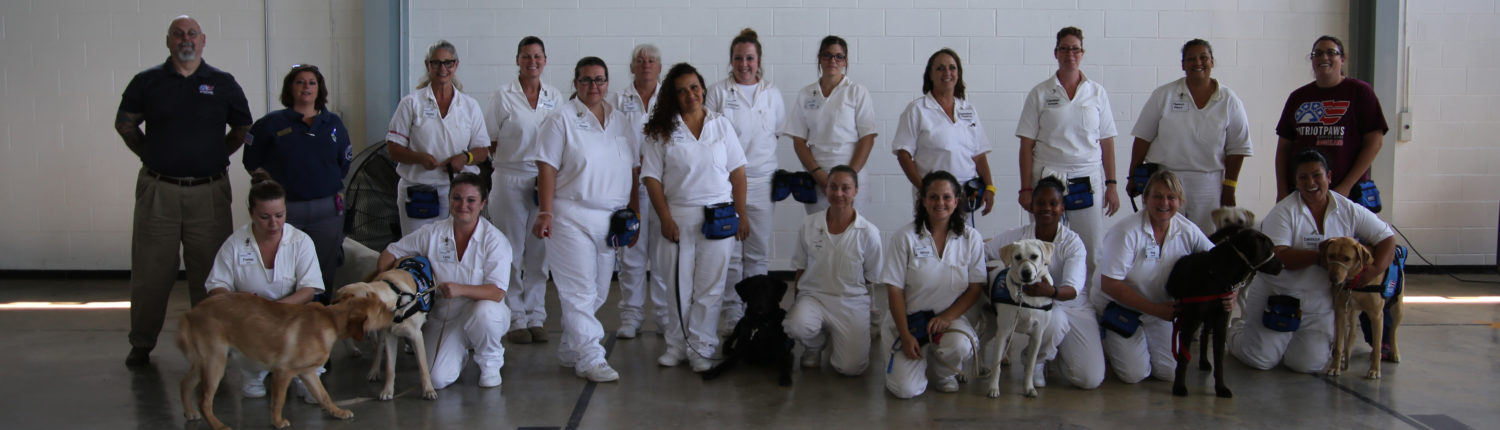
Inmates participating in DTPs are paired with a shelter dog whom they socialize and teach basic commands. DTPs usually begin with a screening that assesses whether an inmate who volunteers for a DTP is qualified to participate. DTPs are typically only offered to the best-behaved inmates (Wright, Jalongo, Guy 2019). Additional considerations include an inmate’s criminal record (a record of domestic violence or animal abuse usually disqualifies them), disciplinary record, length of sentence, and work history (Wright, Jalongo, Guy 2019). Some DTPs, such as the Indiana Canine Assistant Network (ICAN), allow DTP participants to recommend their successors and provide input in the screening process (Wright, Jalongo, Guy 2019). Once selected, inmates train the dogs for purposes that vary from program to program. Oftentimes, DTPs train dogs to provide service or comfort for veterans, people with disabilities, or trauma survivors (Cooke and Farrington 2016). The degree of training given to the dog also varies from basic commands to passing government service animal requirements. Depending on the type of training required, prisoners may spend anywhere from a few hours to the entire day with the dogs. They are responsible for teaching the dogs commands, cleaning them, supporting them, and taking them for walks within the bounds of the prison.
DTP participants have been shown to be less lonely than their peers, possess greater self esteem, and be more effective at self-control (Richardson-Taylor and Blanchette 2001). Guards nearly always report that DTPs encourage positive behavioral outcomes (Richardson-Taylor and Blanchette 2001). DTP participants are also less likely to commit disciplinary infractions in prison, and score higher on emotional and social stability tests than their peers do (Fournier et al. 2007). Inmates participating in DTPs have also been shown to have lower blood pressure, as well as lower overall aggression levels (Osborne and Blair 2003 and Haynes 1991). Though there is no national-scale study of recidivism rates among DTP graduates, numerous smaller studies indicate that DTPs reduce recidivism (Moneymaker and Strimple 1991, Strimple 2003, Walsh and Mertin 1994). One of the reasons DTPs may be effective in reducing recidivism rates is that they offer inmates skills that can later help them find employment opportunities in the pet industry (Turner 2007).
This was an opportunity for me to do something for someone else, because before everything was about me
Renny, ICAN graduate
DTP participants universally acknowledged how difficult, tedious, and frustrating taking care of a dog can be. However, many participants claim that the responsibility teaches them important lessons about patience, kindness, and calmness; lessons that they believe improve mental health and rehabilitation. Kevin, an ICAN participant, reflected that taking care of a dog allowed him to practice patience: “Having to deal with the dog, primarily when they were puppies, dealing with the dog from six in the morning until nine at night… just dealing with everything that comes along with the training aspect… Patience would probably be the biggest virtue” (Turner 2007). Prison staff in another DTP noted a “180 degree turn in attitude” among formerly sullen participants once they began mentoring their dog (Cooke and Farrington 2014). DTP Coordinators note that the fact that the dogs would go to someone who needed them was not lost on the prisoners. Renny, another ICAN participant volunteered because “This was an opportunity for me to do something for someone else, because before everything was about me” (Turner 2007).
The rehabilitative power of DTPs is best illustrated by their graduates themselves. Sam, an ICAN graduate, ultimately reflected that his DTP taught him “how to love again… when I came in here my family was stripped away, all my possessions, everything, I mean, you know, everything… this is the first time since I got arrested that I’ve been smiling and havin’ a good time” (Turner 2007). DTPs are a creative approach to rehabilitation that provide concrete benefits to participants’ mental health and lives after prison.
References
Britton, D. M., & Button, A. 2006. “Prison pups: Assessing the effects of dog training programs in correctional facilities.” Journal of Family Social Work. 9(4):79–95.
Bureau of Justice Statistics. 2005. Recidivism. U.S Department of Justice.
Cooke, Barbara, and David P. Farrington. 2016. “The Effectiveness of Dog-Training Programs in Prison: A Systematic Review and Meta-Analysis of the Literature.” The Prison Journal. 96(6):854-876.
Duindam, Hanne & Asscher, J.J. & Hoeve, Machteld & Stams, Geert & Creemers, H.E. 2020. “Are We Barking Up the Right Tree? A Meta-Analysis on the Effectiveness of Prison-Based Dog Programs.” Criminal Justice and Behavior. 47:749-767. 10.1177/0093854820909875.
Fournier, Angela K., E. Scott Geller, and Elizabeth V. Fortney. 2007. “Human-Animal Interaction in a Prison Setting: Impact on Criminal Behavior, Treatment Progress, and Social Skills.” Behavioral and Social Issues. 16: 89-105.
Fournier, Angela K, and Lori Winston. 2019. “Comprehensive Evaluation of Dog Training and Rehabilitation Initiatives in Correctional Facilities” Pp. 171-191 in Prison Dog Programs, edited by Mary Renck Jalongo. Cham, Switzerland: Springer.
Haynes, M. 1991. “Pet therapy.” Corrections Today.53(5):120-122.
Moneymaker, James, and Earl Strimple. 1991. “Animals and inmates: A sharing companionship behind bars.” Journal of Offender Rehabilitation 16:133–152.
Ormerod, E. 2008. “Companion animals and offender rehabilitation: Experiences from a prison therapeutic community in Scotland.” Therapeutic Communities 29:285-296.
Osborne, S. J. & Bair, R. 2003. Healing inmates’ hearts and spirits with man’s best friend. Corrections Today, 65 (2), 122-124.
Richardson-Taylor, K., Blanchette, K. 2001. “Results of an evaluation of the Pawsitive Directions Canine Program at Nova Institution for Women.” Correctional Service of Canada. Ottawa, Ontario.
Strimple, E.O. 2003. “A history of prison inmate-animal interaction programs.” The American Behavioral Scientist. 47(1):70-78.
The Pew Center on the States. 2011. “State of Recidivism: The Revolving Door of America’s Prisons.” The Pew Charitable Trusts. Washington, D.C.
Walsh, P. G., Mertin, P. G. 1994. “The training of pets as therapy dogs in a women’s prison: A pilot study.” Anthrozoös. 7(2):124–128.
Wright B., Jalongo M.R., Guy T. 2019. “Screening and Selecting Inmates for Program Participation.” Pp. 123-141 in Prison Dog Programs, edited by Mary Renck Jalongo. Cham, Switzerland: Springer.
Image Credit
If you see this after your page is loaded completely, leafletJS files are missing.
